Brokenness and Restoration
Life stories reveal profound human brokenness, yet each narrative carries a thread of hope. We respond with empathy and encouragement, subtly pointing hearts toward the healing power of Christ. These encounters remind us that restoration begins with surrender and is sustained by grace. Through patient listening and Spirit-led words, fractured relationships and wounded souls find glimpses of hope and redemption, echoing the gospel promise that Jesus makes all things new.

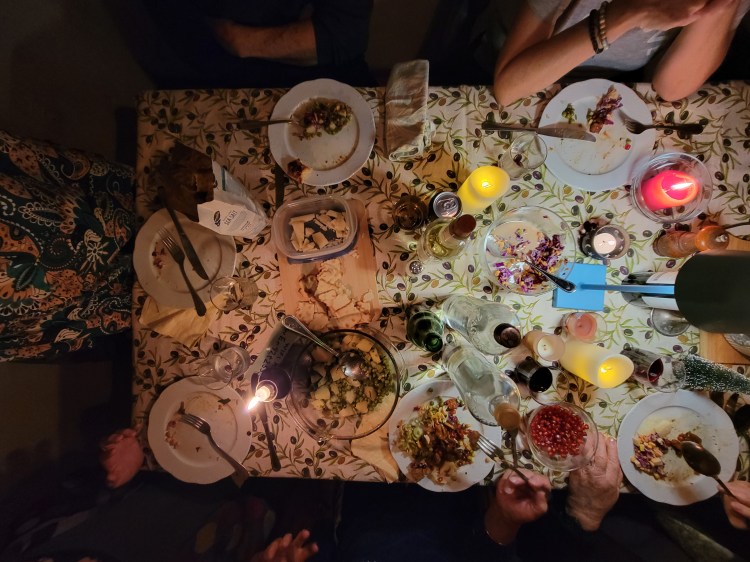
TWO LESBIANS introduced themselves when French-American Φρανσεσκα said, “Two lesbians and an African boy,” with a somewhat apologetic tone. A few awkward seconds passed before Ζεφι said, “That’s okay,” as though her apology was needed and accepted. The Holy Spirit gave me this to say, “We’re so glad you’re here!”
“DO ANIMALS GO TO HEAVEN?” Ζεφι resettled a dying woman’s pet with Κολετ who made the pooch comfortable during his last months with heart failure. Being present with my friends meant listening to and empathizing with their heartache. I replied to their question with confidence that those who believe in Jesus will find themselves in complete agreement with God’s decision on this issue, whatever that may be.
SAYING GOODBYE. Heavy stories rolled from the tongues of the writers, stories about saying goodbye to childhood rape trauma, to a loved one with dementia, to long-held grief, to a husband named in a war memorial, to a cherished career, and to a death row pen pal. So many opportunities to imitate Christ in the way we comfort those who mourn.
“BUT HE’S A PRIEST,” said Βεα who described the angry countenance of the Catholic priest in whose church our choir performed. Preparing for her solo, her nervousness was exacerbated by his show of impatience at our rearranging of the benches to make more space. Βεα recognized the hypocrisy between this priest and the church namesake, Saint Anthony. Disappointment often results in estrangement from the church.
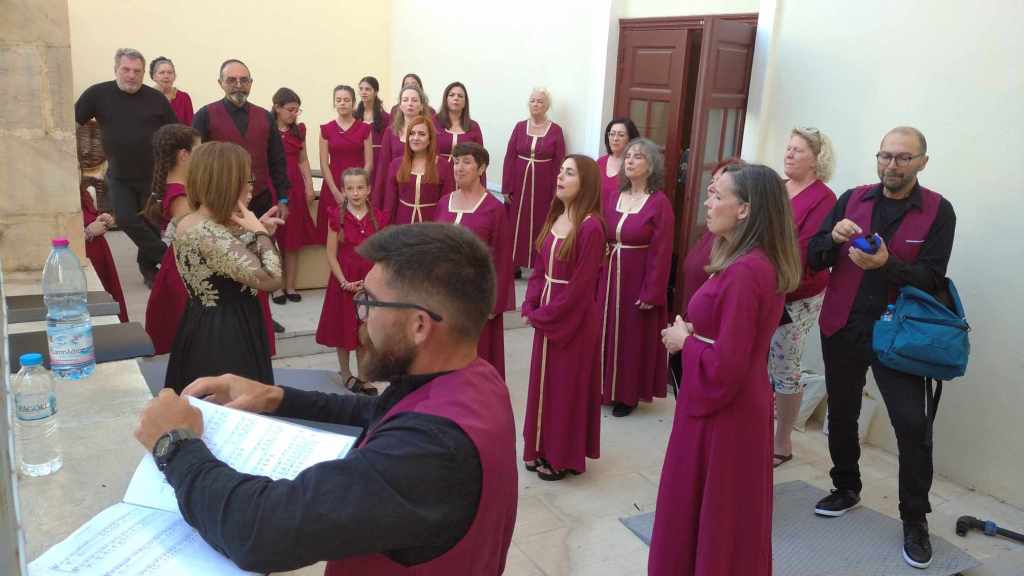
PRAYING IN TONGUES. Stepping outside the Apollon Theater on Syros Island, our little choir joined hands and closed our eyes at which time it felt so natural to begin praying. Though I spoke only in a whisper and sometimes in tongues, I did pray. I prayed for what I knew about each person present and that all the voices represented at the three-day festival would glorify the Lord.
“PRAY FOR ΧΑΪΝΤΙ,” Ηαβα instructed. Our mutual friend had been clawed in the eyeball by her cat about which the doctor reported no hope of healing. A rather surprising invitation from Jewish Ηαβα makes me wonder if she may have sought me out for the purpose of prayer. And together we said, “Amen.”
Cultural and Interfaith Engagement
Serving in a context steeped in tradition requires humility and discernment. Encounters with customs of the national religion, local festivals, and deeply rooted cultural norms highlight the delicate balance between honoring heritage and sharing biblical truth. Further, encounters with a vast array of past and present spiritual beliefs and practices (Catholicism, Judaism, Bahai, New Age) call for discernment and grace. Relationships thrive through curiosity, respect, and dialogue rather than confrontation. By asking thoughtful questions and building trust, opportunities arise to clarify misconceptions and reveal Christ beyond ritual. Cultural engagement underscores discipleship as relational, contextual, and anchored in love.

“WHAT’S YOUR SIGN?” asked Ρονιτ having revealed her self-appointed status as an astrologer. Ρονιτ, normally a very guarded person, shone with pride for her skills and so I asked simple and genuine questions about how her interest developed. This approach moved Ρονιτ to drop her guard and have an authentic conversation.
INTERPRETING OMENS and fortunes tempts Κολετ to explore the spirit world. Her accepting and trusting nature leads to following people without discernment—including the spiritual practices into which they may invite her. She seems aware that these practices are forbidden by God and looks to me for affirmation knowing she will instead find gentle correction.
“WHY FLY KITES?” I asked. Kite flying symbolizes spiritual cleansing, responded the Greek with whom I spoke. The Orthodox fly kites on Clean Monday, which marks the start of Lent, and often accompanies outdoor gatherings and picnics. Despite fasting, the holiday is lively and often includes music and dancing to embrace a positive spirit of the season.
NAME DAYS. Saint Catherine of Alexandria—known for her exceptional wisdom, beauty, and faith—lived during the 4th century under Emperor Maxentius. She is credited with converting many people to Christianity, including the emperor’s wife, and was martyred by beheading for doing just that. On November 25, she is celebrated at the churches bearing her name and by the people given her name.
Sacrificial Love and Service
Christian discipleship is lived out in practical acts of service—helping with chores, offering emotional support, attending events, and meeting urgent needs. These sacrifices often require setting aside personal comfort for the sake of another’s well-being. Such love reflects Christ’s example, demonstrating that ministry is not confined to words but embodied in action. Each gesture, whether large or small, becomes a testimony of grace, reminding others that they are seen, valued, and loved by God.
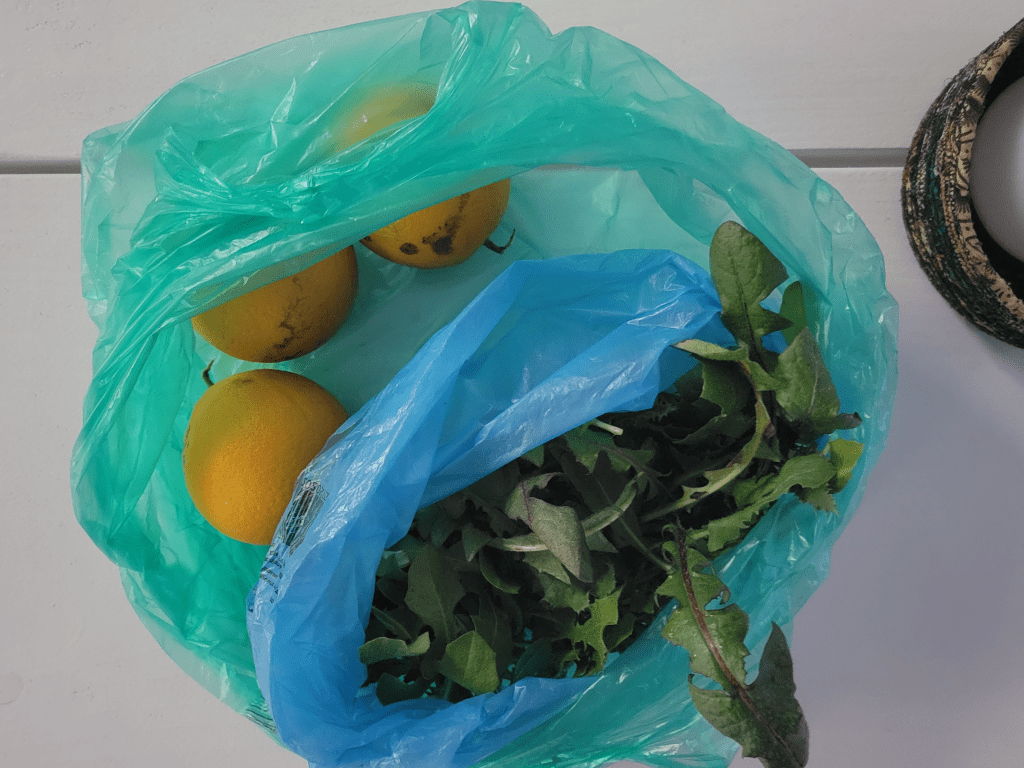
“CAN YOU HELP ME?” she asked. Staring us in the face was Λουλου’s Canadian phone bill of more than $500. “I don’t know what I did wrong?” She frantically described the steps she took, which allowed me to adjust her phone settings. With great relief she expressed her appreciation and later shared our experience with friends.
“WILL YOU COME WITH ME?” asked a friend expecting a challenging dental appointment. My heart began to race, my mouth went dry, and I had to remind myself to breathe. “Yes,” I said, trying to mask my fear and remember the example of sacrificial love that is Christ.
“WILL YOU COME?” asked Δολορες. Her creative productions often require technical expertise, and her usual helpers were unavailable. “Of course,” flew from my mouth recognizing my fair grasp of technology would alleviate her stress.
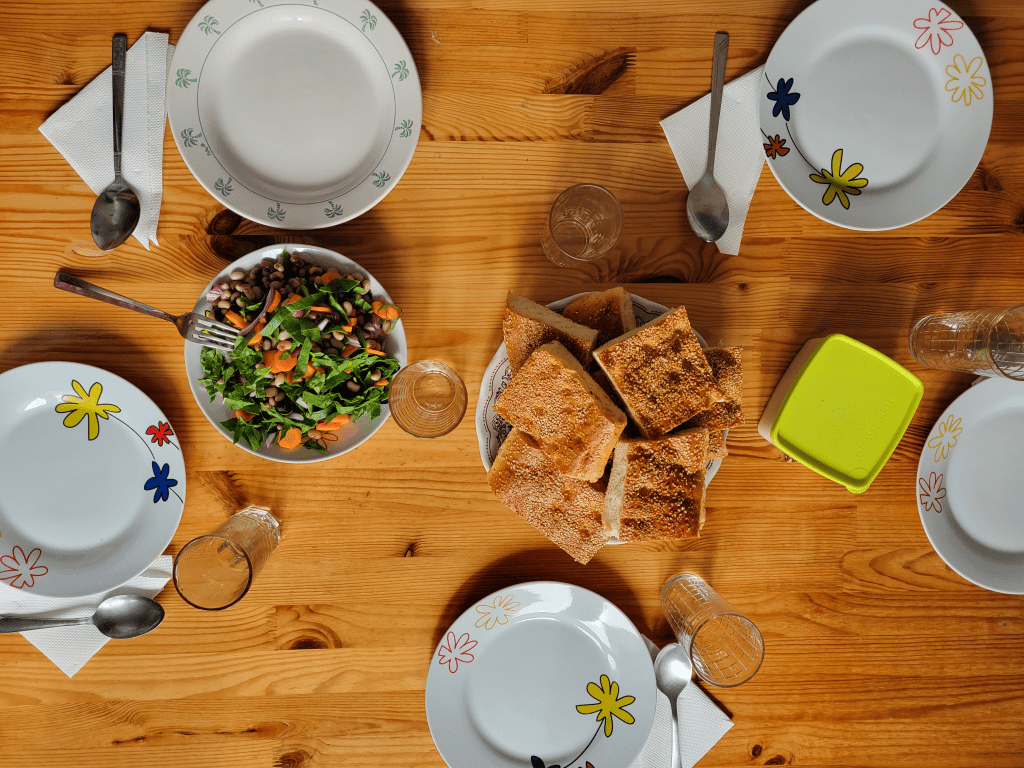
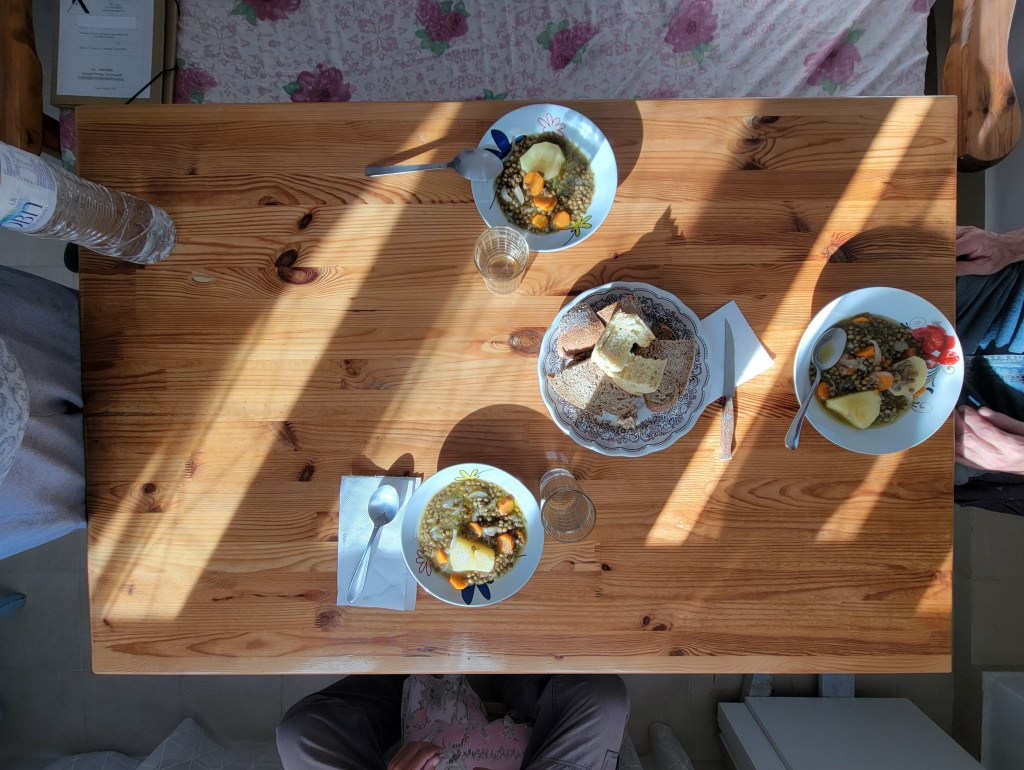
“SIT DOWN,” he ordered in the blunt Greek fashion. The four of us had been harvesting Βασιλης’ olive trees and, rather than pushing to finish quickly, he insisted we rest. During the mid-morning break, he made ready a shady outdoor table with water, dried figs from his farm, and crunchy biscuits. During the lunchtime break, we gathered at the Table inside the house and away from the sun for a fully cooked meal. What a great example of Christlike service.
“I’LL BE BACK,” shouted Ζεφι who immediately ran off to find the bathroom when she saw me. Having sat at her craft booth alone all day, she needed a break. I relieved her for an hour twice during each of two days to allow her and her dog to have the time they needed to ease themselves and to meet the other crafters.
“WILL YOU COME WITH ME” to give blood? Every friend said, “No.” Blood donation is a silent but essential ministry, particularly if you’ve experienced shortages as with countries like Uganda, Kenya, and Greece. A person in need must collect two donations from unwilling others for every one pint they need. You can “bank” your donation for yourself, too. By the time you need that blood, though, it’s a little late to start collecting. Don’t wait!
 Surprised by Hope
You must be logged in to post a comment.